


We start by understanding the nature of the organization, its main activity, administrative structure and the nature of the processes it carries out, as well as its goals for the ISO project. In this phase, the project scope is precisely defined, including the departments, sites or activities the system will cover, and the right standard is selected according to the nature of the activity and the organizational and operational needs. This step is essential because it is the foundation on which the remaining phases are built. The more accurately the scope is defined from the start, the clearer the project and the better aligned it is with the organization's goals.
After defining the scope, we review the organization's current situation and analyze how well it aligns with the target standard's requirements. This includes reviewing current practices, available documents, applied working mechanisms, and the responsibilities of the various departments. The goal of gap analysis is to identify what already exists within the organization and what needs to be developed, completed or reorganized. At the end of this phase, a clear picture of the gaps and the action plan needed to address them is prepared, helping to steer the project in a realistic, well-planned way.
Based on the analysis results, we develop a suitable implementation plan that sets out the work phases, priorities, required tasks, roles and responsibilities, and follow-up mechanism. This plan is designed to suit the organization's size, resources, project duration and current level of readiness. This phase is important because it turns the assessment results into practical, actionable steps and gives all parties a clear view of the project path and what must be achieved at each stage.
In this phase, we begin preparing or developing the elements of the management system in line with the standard's requirements. This includes preparing the policies, procedures, forms, records and organizational controls needed to implement the system within the organization. Here we make sure the outputs are realistic and easy to use, and that they reflect the actual nature of work within the organization, rather than relying on generic documents or unsuitable templates. We also make sure the documents are interconnected, clear and workable for internal teams.
After the system is prepared, the practical implementation phase begins within the relevant departments and teams. In this phase, policies, procedures and forms are activated, integrated into the daily workflow, and compliance with them is monitored in actual practice. This phase is the core of the project, because it moves the system from the document level to the operational level. That is why we work with the client during this phase to clarify roles, support work teams and address any challenges that arise during implementation, until the system becomes part of the actual work environment.
At GCC-CERT, we rely on training as a key element of successful implementation, because no management system will succeed unless the people responsible for carrying it out understand it. That is why we deliver training sessions and awareness workshops tailored to the different groups within the organization, whether top management, system coordinators or operational teams. Training helps raise awareness of the standard, clarify requirements, explain new procedures, and enable employees to perform their roles correctly within the system.
After a sufficient period of implementation, we carry out an internal audit to measure the level of compliance with the system and review how well implementation aligns with the standard's requirements. We also identify nonconformities or areas for improvement and discuss them with the relevant parties within the organization. This is one of the most important phases of the project, because it reveals how ready the organization is before the external audit and allows observations to be addressed proactively, reducing the chance of major issues during certification.
In the final phase, we carry out a comprehensive project review, make sure the essential requirements are complete, and prepare the organization for the external audit by the certification body. This includes reviewing documents, records, implementation mechanisms, internal teams' level of understanding, and any open points that need to be closed. The goal of this phase is to raise confidence and readiness, so the organization enters the certification stage better prepared and organized, with a clear understanding of what may be reviewed during the audit.
Each stage has a clear goal and specific outcomes, which makes it easier to follow and reduces confusion during execution.
We do not prepare documents that are detached from reality; instead, we design the system to serve actual operations within the organization.
We adapt the working methodology according to the sector, size, level of readiness, and nature of the operations.
Our goal is to raise actual audit readiness, not just to complete formal requirements.
We accompany the client from the beginning of the project until the certification readiness, with continuous follow-up and guidance.
ISO 9001 – ISO 45001 – ISO 14001 – ISO 37001
ISO 45001 – ISO 14001 – ISO 9001 – ISO 27001 – ISO 22301
ISO 27001 – ISO 20000-1 – ISO 27701 – ISO 42001 – ISO 9001
ISO 9001 – ISO 27001 – ISO 22301 – ISO 27701 – ISO 45001
ISO 21001 – ISO 9001 – ISO 27001 – ISO 27701 – ISO 42001
ISO 22000 – ISO 9001 – ISO 14001 – ISO 45001
Not all organizations start from the same point, but there are clear indicators that the organization could greatly benefit from implementing an ISO-compliant management system. Some of the most important indicators include: an increase in the volume of operations, a need to standardize procedures, the repetition of certain errors, customer requirements, the need to improve discipline, information protection, safety enhancement, readiness for expansion, certification, or larger contracts.
A clear methodology not only helps in completing the project, but also creates value within the organization. Through organized implementation, the system becomes a means to improve work, clarify responsibilities, increase discipline, reduce overlaps and errors, and improve readiness for follow-up and review.
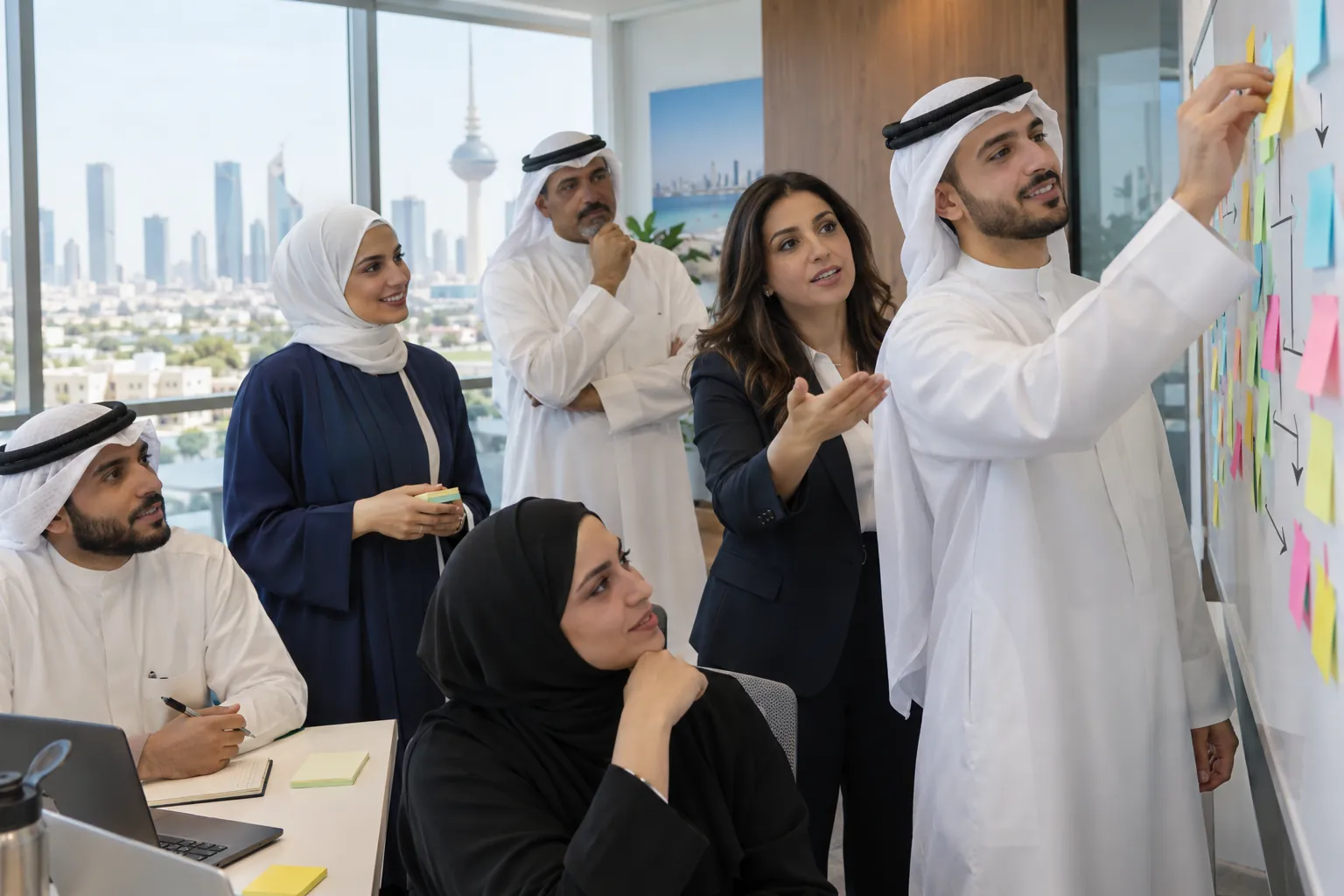
A specialized organization in qualification and preparation for ISO certification in Kuwait, providing services in gap analysis, system development, training, internal auditing, and preparation for certification.
We focus on actual implementation and linking documents to day-to-day work within the organization, not just on preparing documents.
Yes, we help in evaluating the nature of the activity, sector, and the need to determine the most appropriate standard for the organization.
Yes, we serve multiple sectors such as contracting, oil and gas, technology, healthcare, education, and food.
The first step is to understand the activity and determine the appropriate standard, then assess the current situation through a gap analysis.
Yes, the system and procedures are adapted according to the size of the organization and the nature of its operations.
It is better to first begin with qualification and preparation and raising the readiness, then move on to the certification phase.
This depends on the type of certification, the size of the organization, the level of readiness, and the speed of internal implementation.
Yes, we can support the organization in more than one standard, depending on the nature of its activities and objectives.
Yes, training is an essential part of our services to raise the awareness of internal teams and enable them to apply it correctly.
Yes, it is one of the most important elements that help detect findings and increase readiness before certification.
Yes, we provide solutions that are aligned with standards such as ISO 42001, ISO 22989, and other modern standards.
Learn about the certificates we help you qualify for and obtain.
Explore the core services we provide for building the system and raising readiness.
Review the practical path from start to preparation for certification.
Discover how we tailor solutions based on the nature of the activity and the sector.
Typically replies within an hour
I will be back soon


